Your shopping cart is empty!
Koozai's Kelly-Anne Crean says SEO and PPC just need to share data
Publication date: 04.09.2026
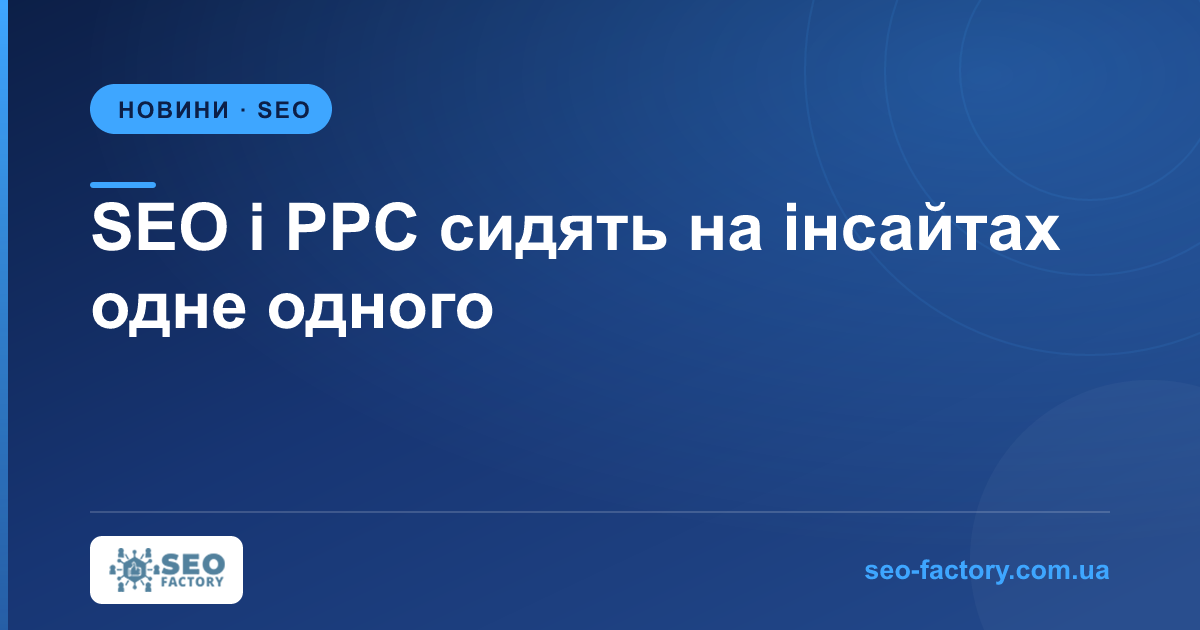
"The gap between SEO and PPC isn't a technical problem. It's a communication problem," writes Kelly-Anne Crean, Head of Operations at Koozai. Her argument: do not restructure the teams — make them share data, because each channel sits on insights the other one pays for separately.
The logic is straightforward. The search terms report in Ads shows what converts and at what cost — a ready-made organic priority list. A query with a high CPC and solid conversion is the first candidate for the SEO plan, because ranking for it pays back for years. The reverse works too: if a page already holds the top spot, paid clicks on that query often duplicate free traffic.
What the channels hand over to each other:
- PPC → SEO: converting queries, expensive keywords and CPC trends — where to push the content plan;
- SEO → PPC: rankings that justify cutting bids, plus organic research feeding the negative keyword list;
- both: one shared keyword list from the start, not two parallel research projects;
- both: a landing page check before launch, so a paid page does not duplicate an intent an existing page already covers.
One more item is a joint monthly call with the client. The column ran in Search Engine Land, and that advice is not about politeness: when teams present separately, the client hears two versions of the strategy instead of one.
In practice, the overlap between the channels comes down to a few steps:
- export a quarter of search terms and flag queries with above-average CPC and decent conversion — that is your draft SEO priority list;
- match top organic rankings against active keywords in Ads and recalculate bids where the overlap is total;
- keep one shared keyword document that both teams write into;
- before every new paid landing page, check whether a page for that intent already exists;
- put one joint monthly call with the client in the calendar, not two.
The list looks simple, which is exactly why it's telling that Kelly-Anne Crean calls the gap between SEO and PPC a communication problem: both channels already have the data, they just aren't in the habit of sharing it.