Your shopping cart is empty!
Google will allow personalized alcohol ads on YouTube from October 30
Publication date: 04.09.2026
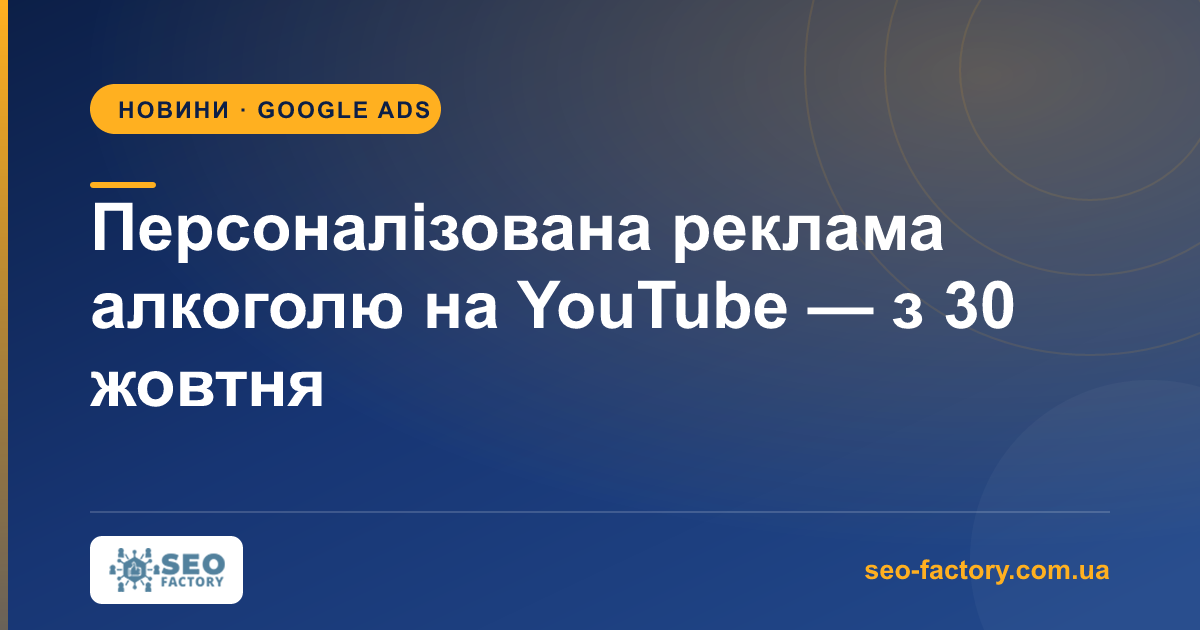
On 30 October 2026 Google enables personalised targeting for alcohol advertising on YouTube. Until that date spirits, wine and beer brands could only buy non-personalised impressions there; now they get the same audience tools as every other advertiser.
Three product categories and market exceptions
The update covers three product groups: alcohol itself, related products and alcohol-substitute drinks. It will work in most markets where local law does not prohibit personalised alcohol advertising; Egypt, India, Indonesia and Poland are explicitly excluded. Search Engine Land reported the policy change, noting that final availability still depends on each country's rules and Google's own country policies.
The safeguards are not going anywhere:
- age restrictions on serving remain in force;
- targeting based on alcohol-related health data is still prohibited;
- personalised advertising to minors is unavailable;
- alcohol remains a sensitive category with its own set of limitations;
- viewers can reduce the frequency of such ads through My Ad Center.
| Capability | Before 30 October | After |
|---|---|---|
| Interest-based audiences | no | yes |
| Remarketing and customer lists | no | yes |
| Look-alike segments | no | yes |
| Age restrictions | apply | apply |
| Health-data targeting | prohibited | prohibited |
The economics of placement shift
For the market this signals that YouTube is maturing into a performance channel even in heavily regulated niches. Personalisation changes the economics of placement: instead of broad reach a brand gets remarketing, custom audiences and interest segments — a chance to count actions, not just views. It is also a reason to revisit the media split: budget that went into reach simply because there was no alternative can now work on bringing an audience back.
There is a flip side. Personalisation does not make the creative better; it only delivers the existing one more precisely. The category is sensitive, so frequency capping and tone of voice matter more than in ordinary retail: overly persistent remarketing damages brand perception faster than it adds sales.
Does this affect Ukraine
Directly — mostly those running campaigns for external markets. In Ukraine alcohol advertising is tightly restricted by the advertising law, and Google maintains separate country policies, so the question here is not about account settings but about the legal admissibility of the placement itself. That is checked with a lawyer, not in the ad platform's help centre.
For Ukrainian producers selling abroad the logic is different: personalisation is opening there, and whoever already has audiences built and analytics configured wins. Without correct measurement the new targeting simply spends the budget faster — the basics are covered in the guide on Google Analytics 4 setup.
Six things to prepare before 30 October
- confirm with a lawyer whether personalised alcohol ads are permitted in your markets — Google's policy does not override local law;
- build audiences in advance: customer lists, site visitors, channel viewers, look-alikes based on them;
- check creatives against age and local requirements so you do not collect disapprovals at launch;
- set aside a separate test budget for the first weeks while there is no real CPA data;
- configure conversion tracking before launch, not after — otherwise the first month runs blind;
- cap frequency from day one so you do not exhaust the audience immediately.
Formally, this is just the removal of a restriction that kept alcohol budgets on YouTube separate from the rest of performance marketing for years. Whether access to audiences translates into real sales growth or simply burns through budget faster will become clear from the first campaigns after 30 October.