Your shopping cart is empty!
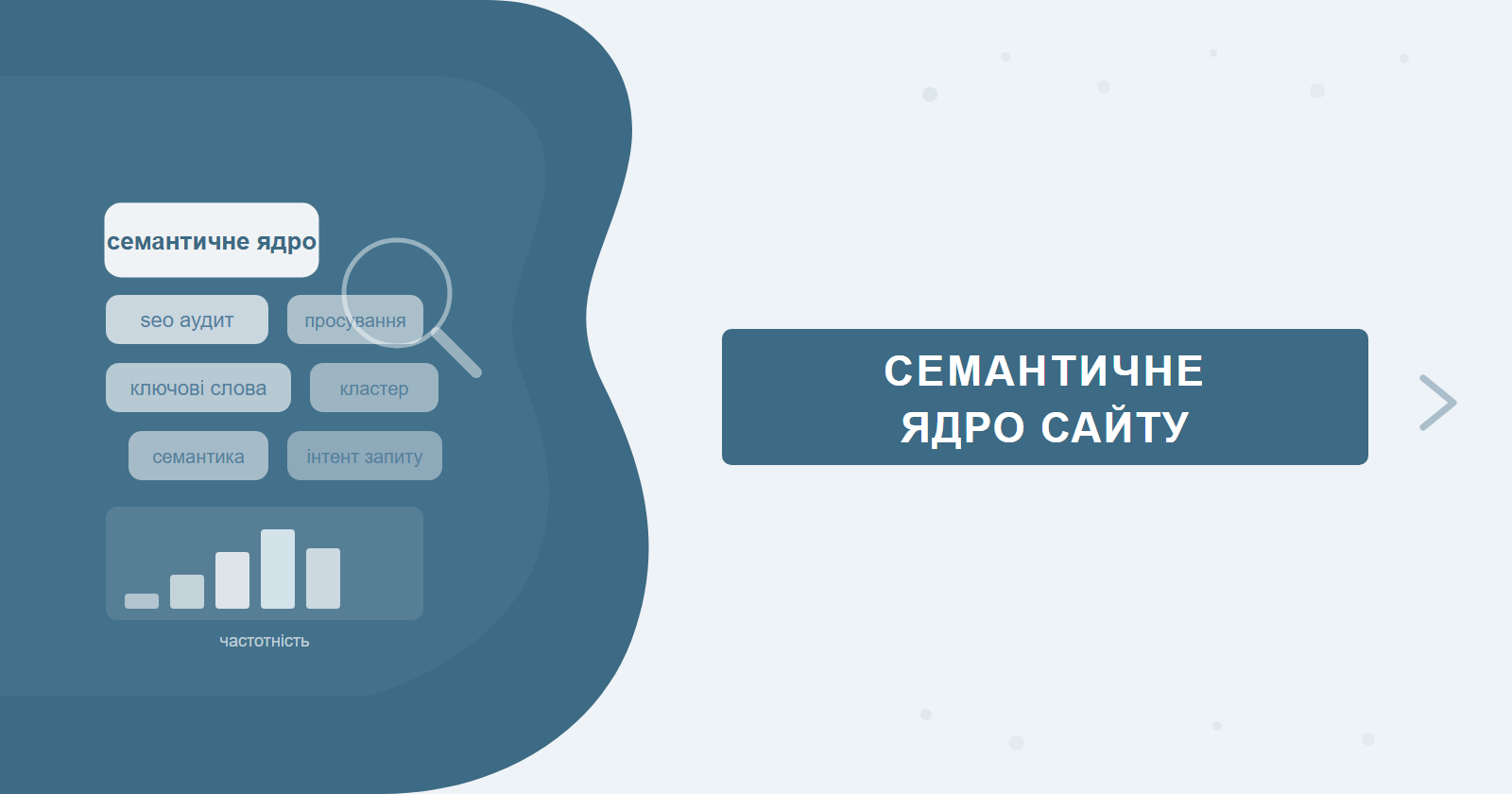
A semantic core is the foundation of any SEO project. Without it, optimisation becomes guesswork — you're doing things, but not sure where you're heading. A well-built keyword core defines site structure, content planning, and page allocation for specific queries. Get this right and everything else — rankings, traffic, conversions — follows more predictably.
This guide covers the full process: from raw keyword collection and competitor analysis to page-level implementation and ongoing monitoring. If you need professional SEO support, the SEO-Factory team is ready to handle website promotion end-to-end.
Contents
- What a semantic core is and why it matters
- Types of search queries
- Tools for keyword research
- Competitor analysis for keyword discovery
- Search volume and keyword difficulty: reading the numbers
- Clustering: grouping keywords by page
- Mapping semantics to site structure
- Seasonality and trending queries
- Implementing keywords in content
- Monitoring results
- Common mistakes and how to avoid them
What a Semantic Core Is and Why It Matters
A semantic core is an organised list of target keywords, each mapped to a specific page on your site. It defines not just content, but the entire site architecture: how many categories, which subsections, and which landing pages you actually need.
Without a semantic core, you run straight into keyword cannibalization — multiple pages optimised for the same queries, competing with each other. Google can't decide which page to prioritise, so none of them rank effectively. We've audited sites where five pages were splitting position signals for the same query instead of one page sitting solidly in the top 3.
Types of Search Queries
Before collecting keywords, understand what you're collecting. Queries are categorised by intent and search volume. The right combination delivers traffic at every stage of the funnel.
| Query type | Example | Intent | Target page |
|---|---|---|---|
| Informational | "what is an SEO audit" | Learn | Blog, article |
| Navigational | "SEO-Factory login" | Find a site | Homepage, brand |
| Commercial | "SEO promotion pricing" | Compare | Category, service page |
| Transactional | "order SEO promotion" | Buy/order | Landing page, form |
For a commercial site, the primary focus is transactional and commercial queries. Informational queries serve the blog and help build domain authority through useful content. A smart strategy uses both: transactional for immediate conversions, informational for long-term traffic and trust.
Tools for Keyword Research
No single tool gives the complete picture. Best practice is to combine several sources and cross-reference results.
Free tools
- Google Search Console — shows actual queries your site already receives impressions for. The starting point for analysing your existing semantic footprint. Filter by page, country, and device.
- Google Keyword Planner — Google's own baseline tool: volume, competition level, and related queries. Note: volume figures are estimates, not exact organic counts.
- Serpstat (free tier) — competitor analysis: which keywords the top-ranking sites in your niche are targeting.
- Google Autocomplete — suggestions often surface long-tail queries with clear intent that tools might miss.
- Google Trends — free tool for seasonality and trend analysis. Essential for content planning.
Paid tools
- Ahrefs Keywords Explorer — the most comprehensive database for English-language markets with solid Ukrainian coverage. Shows KD, traffic potential, and click data. You can also see which competitor pages rank and for how many queries.
- Serpstat — strong coverage of Ukrainian and Russian-language semantics, built-in clusterer, domain-level and URL-level competitor analysis.
- Semrush — powerful for competitor analysis, content gap research, and keyword mapping across billions of queries.
Tip: start by analysing your three main competitors in Serpstat or Ahrefs. Their ranking keywords are already proven semantics with real traffic behind them. Google's own guidance on how search works is covered in the Google SEO Starter Guide.
Competitor Analysis for Keyword Discovery
Competitor analysis is the fastest way to build quality semantics. Your competitors have already spent time and budget figuring out which queries drive traffic. You can build on those findings instead of starting from scratch.
Finding the right competitors
SEO competitors are not necessarily your direct business competitors. They're sites ranking for the same queries you want to target. An e-commerce store might compete with an aggregator or a blog, not just other stores.
- Search 5–10 of your target queries in Google. Which sites consistently appear in the top 10?
- In Serpstat or Ahrefs, enter your domain → Competitors section — get a list of sites with the highest overlap in organic keywords.
- Filter by domain authority: focus on sites within ±20–30 DR/DA of your own. Going after Walmart or Amazon from day one is unrealistic.
Analysing a competitor's organic keywords
In Ahrefs: Site Explorer → enter the competitor's domain → Organic Keywords. You'll see the full list of ranking queries with positions, volume, and the specific URLs. Sort by traffic — the most valuable queries rise to the top.
In Serpstat: enter the competitor's domain → SEO Analysis → Keywords. The "Top Pages" feature shows which pages drive the most traffic — and which queries they're ranking for.
Content gap analysis: keywords your competitors have, you don't
A content gap is a set of queries your competitors rank for but your site doesn't. These are direct signals for expanding your semantic core.
In Ahrefs: Content Gap → enter 3–5 competitors and your domain → you'll see which keywords they collectively rank for while you don't. Semrush calls the same feature Keyword Gap.
Real example: for a furniture e-commerce client, we ran a content gap analysis across four competitors and identified 340 queries of the type "[sofa material] [colour] buy" that weren't represented on the site. After adding the corresponding filter pages — organic traffic grew by 23% over three months.
Search Volume and Keyword Difficulty: Reading the Numbers
Collecting keywords is one thing. Knowing which ones to prioritise is another. Three metrics determine the value of each query: Volume, KD, and CPC.
Volume (search volume)
Volume is the average monthly search count. Seems simple, but there are nuances:
- Volume 1,000 for "buy sofa London" and Volume 1,000 for "what is a sofa" represent completely different value. One brings buyers, the other brings readers.
- Tools often aggregate similar query variants and can overstate figures. Use volume as a directional signal, not an exact count.
- Queries with 50–200 monthly searches in niche markets can outperform Volume 5,000 queries in competitive ones — less traffic, but significantly higher conversion rates.
KD (Keyword Difficulty)
KD is a difficulty score for reaching the top 10 for a query. Scale of 0–100. It's a relative metric based on the backlink profiles of pages currently ranking — not an absolute barrier.
| KD (Ahrefs) | What it means | Strategy for a newer site |
|---|---|---|
| 0–20 | Easy — few strong competitors | Prioritise these; fastest results |
| 21–40 | Moderate — competition exists but reachable | Core of the keyword set for 1–2-year-old sites |
| 41–60 | Hard — domain authority required | Plan for 6–12 months of work |
| 61–100 | Very hard — top dominated by authority sites | Work around it with long-tail variations |
CPC (cost per click)
CPC is the paid search price per click. For organic SEO it's an indirect signal of commercial value. If advertisers pay $3–$10 per click for a query, it means the query drives actual buyers — not just readers. Those are worth fighting for in organic search too.
Prioritisation formula: the best queries for a newer or mid-authority site combine moderate volume (200–1,000), low KD (under 30), and noticeable CPC. Achievable in rankings and likely to convert when you get there.
When to target low-volume queries
Low-volume queries (10–100 monthly searches) are frequently dismissed. That's a mistake. From our practice: for a legal services site, the query "divorce lawyer [specific city]" with 40 monthly searches generated 3–5 consultations per month consistently. The broad query "divorce lawyer" with 5,000 monthly searches — zero leads, because the site had no chance of ranking for it.
Low-volume queries: low competition, high specificity, often closer to the moment of purchase decision. For an e-commerce store: "[specific model] buy [city]" beats "[product category] buy" every time for a site building its authority.
Clustering: Grouping Keywords by Page
Clustering means grouping keywords so that each group maps to a single page. One query — one page. Multiple queries with the same intent — one page.
SERP-based clustering
The most accurate method. If two queries share 3–4 identical URLs in the top 10, they belong in the same cluster — a single page can rank for both. Serpstat and Ahrefs can automate this at scale. The logic is straightforward: if Google serves the same pages for both queries, it treats them as the same intent.
A practical nuance: check not just the URL overlap count, but the content type in the top results. If one query has e-commerce category pages in the top 3 and another has blog articles, don't merge them into one cluster even if some URLs coincide. Different content types signal different intent — and Google will serve them differently regardless of how you group them.
Intent-based clustering
A manual approach. You decide which queries share the same user intent and can be served by a single page. Practical for smaller keyword sets (up to 200–300 queries). The risk: misreading intent — for example, merging an informational and a transactional query that Google actually handles on different page types.
SERP-based clustering is more accurate but requires paid tools or manual SERP checks. For a keyword set under 100 queries, manual clustering works fine. For 500+ queries — automation is the only practical option.
Mapping Semantics to Site Structure
After clustering, each keyword group needs to be assigned to a specific URL. This produces your semantic site map — a document that becomes the foundation for site architecture, a content plan, and briefs for developers or content writers.
Semantic map format (spreadsheet)
| URL | Cluster / Topic | Primary keyword | Secondary keywords | Page type | Priority |
|---|---|---|---|---|---|
| /seo-audit/ | SEO audit | seo audit service | technical seo audit, site audit, order seo audit | Service | High |
| /website-promotion/ | Website promotion | website promotion | seo promotion, search engine optimisation, order seo | Service | High |
| /blog/semantic-core/ | Keyword core | keyword semantic core | keyword research, seo keywords, clustering | Blog | Medium |
| /blog/core-web-vitals/ | Core Web Vitals | core web vitals | lcp inp cls, improve cwv, page speed seo | Blog | Medium |
Silo structure: hierarchy that helps rankings
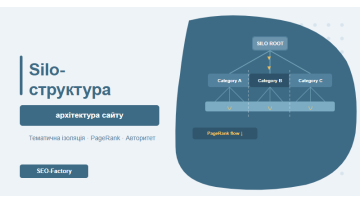
A well-built SEO site structure uses a silo architecture: homepage → categories → subcategories → product/service pages. Each level gets its own keyword clusters. Homepage targets the broadest transactional queries. Category pages get mid-frequency commercial terms. Subcategory and product pages get narrow, specific, or long-tail queries.
The silo model also simplifies internal linking: top-level pages pass link equity down to subpages. A blog article about SEO audits naturally links to the SEO audit service page — and both pages receive additional relevance signals for their respective keyword clusters. This is the compounding effect of semantic architecture done properly.
New page signal: if clustering produces a group with no existing page to assign it to — that's a clear signal to create a new page. Don't force a cluster onto an existing page with a different intent just to avoid the work. You'll undermine both pages.
Seasonality and Trending Queries
Not all queries are equally active year-round. Seasonality is a real factor in most niches. Ignore it during keyword planning and you'll publish content after the peak has passed — then wait another year to try again.
Google Trends: the underused free tool
Google Trends shows how query popularity shifts over time. You can compare up to five queries simultaneously, filter by region and category. Data is normalised (0–100 scale) rather than absolute, but seasonal patterns are immediately clear.
Seasonal peaks by niche
| Niche | Peak months | Example queries | When to publish content |
|---|---|---|---|
| Air conditioning | April — June | "buy air conditioner", "AC installation" | February — March |
| Online education | August — September, January | "coding courses", "learn English online" | 4–6 weeks before peak |
| Flowers / gifts | February, March, May | "flower delivery", "Valentine's gifts" | December — January |
| Home renovation | March — October | "apartment renovation", "buy tiles" | February, then ongoing |
| SEO services | September — November, January | "order seo", "website promotion" | 1 month before season |
How to plan for seasonal content: add a "Target publish month" column to your semantic map. Pages and articles targeting seasonal peak queries need to be published and indexed 4–8 weeks before the peak. Google needs time to crawl, index, and establish rankings for new content.
Implementing Keywords in Content
Collecting and grouping keywords is half the work. The other half is placing them on-page so Google understands the topic without treating the content as spam.
Where to place keywords
- Title tag — primary keyword near the beginning, under 60 characters.
- H1 — one per page, containing the primary query or a natural paraphrase.
- H2–H3 — secondary keywords, LSI terms (semantically related phrases).
- First paragraph — primary query or a close variant within the first 100 words.
- Image alt attributes — descriptive text with the keyword where it fits naturally.
- URL slug — short, descriptive, containing the primary keyword.
- Meta description — keyword in the first sentence, call to action at the end.
Practical rule: in a 1,500-word article, the primary query appears 3–5 times in natural context. LSI synonyms and related terms can appear freely — they expand topical coverage without triggering over-optimisation filters.
Keyword implementation checklist
- Confirm the page exists. Each cluster needs its own URL. If the page doesn't exist — add it to the development backlog.
- Write the title tag and H1. Title: primary keyword + brand, under 60 characters. H1: expanded formulation, not a word-for-word copy of the title.
- Write the meta description. 140–160 characters, keyword in the first sentence, call to action at the end.
- Place the primary keyword in the first paragraph. Within the first 100 words — naturally, not forced.
- Use H2–H3 for secondary keywords and LSI. Each section introduces a new subtopic or variation of the main query.
- Check the URL slug. Should include the primary keyword. Avoid numeric ID parameters or long strings of characters.
- Add alt text to images. Descriptive text, keyword included where appropriate — not stuffed.
- Set up internal links. Connect the new page to relevant existing pages. Anchor texts should be natural and contain the keyword or a synonym.
Monitoring Results After Semantic Core Implementation
Building a semantic core is not a one-time project. After implementation, the monitoring phase begins: track positions, analyse traffic patterns, and decide what needs adjustment.
Google Search Console: your primary free monitoring tool
Open Search Console → Performance → Search results. Key signals to watch:
- Clicks and impressions — overall organic traffic trend for the site.
- CTR — if CTR is low despite a position 3–5 ranking, the title or description needs rewriting.
- Average position — which queries and pages are moving.
- Pages filter — check which pages from your new keyword core are starting to receive impressions. Pages sitting at positions 11–20 are prime candidates for content improvement.
When to update the semantic core
Semantics are not static. Triggers for a keyword core revision:
- Every 6–12 months — a planned review: new queries in the niche, volume shifts, changed competition.
- After major Google algorithm updates — Core Updates can reshuffle which pages rank and for which queries.
- When expanding your product or service range — new offerings need new keyword clusters and new pages.
- If traffic drops without an obvious technical cause — check whether query intent has shifted; Google may have started serving a different content type for that keyword.
- When new competitors enter the market — run a fresh content gap analysis.
A semantic core is a living document. After launch, it keeps expanding — driven by GSC data, competitor analysis, and new trends in the niche. A keyword core that hasn't been reviewed in two or more years is almost certainly stale.
Common Mistakes and How to Avoid Them
Most semantic core failures aren't technical — they're conceptual. The same patterns appear repeatedly across site audits, and each one costs months of wasted effort.
- Keyword cannibalization. Two or more pages targeting the same query. Fix: merge the pages or implement a canonical tag. Use GSC to identify which URLs share impression signals for the same query.
- Too narrow a core. Collecting only 20–30 keywords and stopping. A real commercial site needs hundreds or thousands — not dozens. Long-tail queries in aggregate usually outperform head terms in both volume and conversion rate.
- Ignoring long-tail queries. Queries with 10–50 monthly searches have low competition and deliver high-converting traffic. Their combined volume often exceeds the traffic from "head" keywords.
- Not updating the core. Semantics go stale. New terms emerge, volumes shift. Review your keyword core every 6–12 months.
- Keywords without page mapping. Collecting 500 queries into a spreadsheet and leaving them unassigned. Without clustering and URL mapping, it's just a word list.
- Ignoring seasonality. Publishing seasonal content after the peak — then waiting another year for the next window.
- Only chasing high-volume queries. Newer sites have no realistic chance of ranking for KD 70+ queries quickly. Start with achievable low-to-mid KD terms and build authority.
- Ignoring SERP content type. Before optimising a page, check what Google actually shows for your target query. If the top 10 is all blog articles but you're building a commercial landing page — no amount of optimisation will get it to rank. Match the content format to what Google expects to see.
Frequently Asked Questions
How many keywords should a semantic core contain?
For a small business site, 50–200 keywords is sufficient. For a mid-sized e-commerce site — 500–2000+, depending on the number of categories and products. What matters is not quantity but the quality of clustering: each page should have a clear keyword cluster without overlap with other pages.
What is the difference between head, mid-tail, and long-tail keywords?
Head keywords (1000+ searches/month) have the highest competition — use them for main pages and top categories. Mid-tail keywords (100–1000) suit subcategories and reviews. Long-tail keywords (under 100) work best for individual products and blog articles. Long-tail keywords deliver the highest conversion rates and fastest results.
What free tools can be used for keyword research?
Google Keyword Planner (free with a Google Ads account), Google Search Console (shows real queries driving traffic to your site), Ubersuggest (basic features free), Keywords Everywhere (Chrome extension), plus Google autocomplete suggestions and the "Related searches" section at the bottom of SERP.
How often should you update your site's semantic core?
At minimum once a year to check search volume trends and discover new queries. Immediately when launching new categories or products. Also review after every major Google algorithm update: some queries change intent, causing previously ranking pages to drop in performance.
Need help building your keyword core?
SEO-Factory builds semantic cores tailored to specific niches — from collection and filtering to clustering, semantic site mapping, and on-page implementation. We analyse your competitors, identify content gaps, and build a content plan that accounts for seasonality.