Your shopping cart is empty!
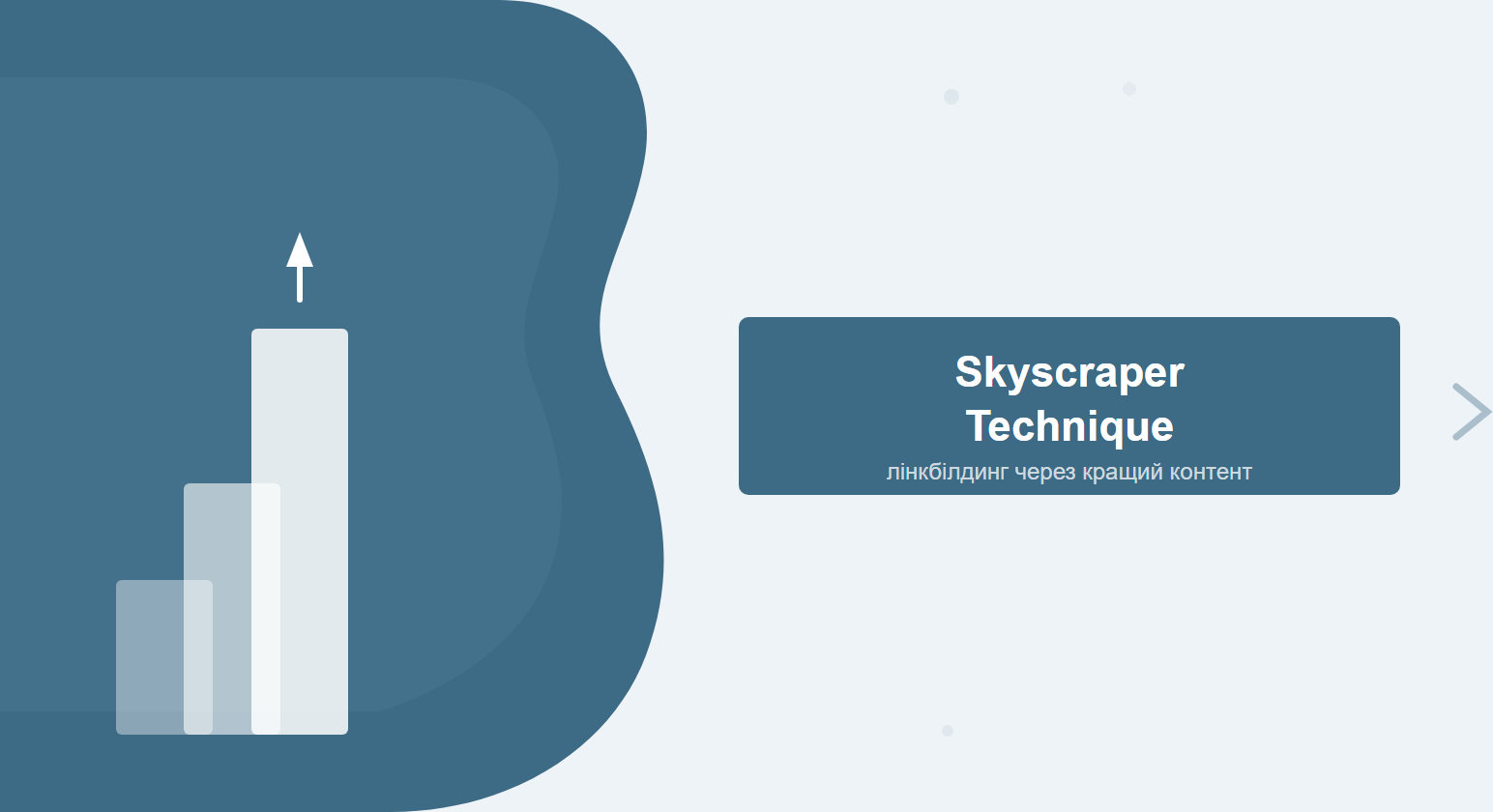
The Skyscraper Technique is a link building method from Brian Dean that's been around for over a decade — and still delivers real results. Find content with backlinks, build something better, pitch the upgrade to linkers, and earn the link.
Contents
- What Is the Skyscraper Technique
- Step 1: Finding the Right Topic
- Step 2: Making Your Content Actually Better
- Step 3: Outreach — Emails That Get Replies
- Skyscraper 2.0: Search Intent at the Core
- Skyscraper vs Other Link Building Methods
- Common Mistakes and When the Method Doesn't Fit
- Frequently Asked Questions
What Is the Skyscraper Technique
Brian Dean of Backlinko introduced this method in 2013 and named it the "skyscraper" for a reason: in a city of buildings, everyone looks at the tallest one. The highest structure draws attention. The same logic applies in content marketing — the best piece on a topic earns the most links.
The classic version has three steps: find content with backlinks, build a better version, then pitch it to the sites linking to the original. The idea is straightforward, but execution demands a systematic approach — from topic selection to the last follow-up email.
The method works especially well for specific content formats: resource guides, statistics roundups, tool lists, and deep-dive "how" and "why" articles. These formats naturally accumulate links because editors cite them as sources.
One thing worth understanding upfront: Skyscraper is not about article length. You can write 8,000 words, but without original data, fresh examples, and a clear structure, linkers won't see a reason to switch. "Better" means something specific, not something abstract.
E-E-A-T and Skyscraper: Google evaluates author Experience and Trust. For a Skyscraper piece to actually rank, include your own case studies, screenshots, test results — anything that proves you didn't just rewrite Wikipedia. Check our guide on how Google evaluates E-E-A-T for the full picture.
Step 1: Finding the Right Topic
Topic selection is the highest-stakes decision in the whole process. Get it wrong and you'll invest 30+ hours only to find that the niche is too narrow, the original content has already been updated, or the linkers simply don't respond to your pitch.
Where to Look for "Skyscrapers"
The primary tool is Ahrefs Content Explorer. Enter a keyword from your niche and filter results by referring domains: minimum 50, preferably 100+. This surfaces content that has already earned trust from editors in your space.
Run a parallel check in Ahrefs Site Explorer on your competitors: which of their pages have the most backlinks? Those URLs become a ready list of Skyscraper candidates.
A free alternative: search Google for your target keyword, then check each top-10 page through Ahrefs Free Backlink Checker or Moz Link Explorer to see the referring domain count.
Topic Selection Criteria
- 50+ referring domains — fewer means your outreach pool will be too small to matter
- Search demand — verify search volume through keyword research: a topic with no traffic gives you links but no audience
- Room to outdo the original — be honest: do you have the data, expertise, or resources to create something meaningfully better?
- Enough sites for outreach — aim for 80+ unique domains; if only 3–4 sites link to the original, even a 15% conversion rate means roughly zero links
The "too broad topic" trap: "SEO guide" or "Instagram marketing" — enormous competition, and your outreach pool will be hundreds of sites with wildly different audiences. A tighter topic like "Skyscraper Technique for B2B SaaS" gives a smaller pool but much higher outreach conversion.
Campaign Timeline
Step 2: Making Your Content Actually Better
This is where most campaigns fail: the team writes a "longer version" of the same material, and editors receiving the outreach pitch simply can't see the difference. "Better" has to mean something specific.
Five Ways to Create Genuinely Better Content
1. Original data. A survey, internal analytics, an A/B test, a client case study — any primary research that doesn't exist in the original. This type of content gets cited most heavily because there's nowhere else to find those numbers.
2. Freshness. If the original was written in 2018 and yours includes current-year data, that's a concrete reason to switch. This matters most in fast-moving topics: algorithm updates, statistics, tool landscapes.
3. Depth without filler. Not just more sections — actual answers to questions the original ignores. Dig through comments, Reddit threads, and Q&A forums to find what readers keep asking that the original never addresses.
4. Better structure and UX. A table of contents, anchor links, comparison tables, checklists — anything that lets a reader orient in 10 seconds. Google tracks behavioral signals; good UX translates to a lower bounce rate.
5. Original visuals. Custom diagrams, infographics, screenshots — not stock images. Editors specifically mention original illustrations in their reply emails far more often than text improvements.
Skyscraper Content Quality Checklist
| Criterion | Check question | Priority |
|---|---|---|
| Original data | At least one original fact, study, or case study present? | required |
| Freshness | All data less than 1–2 years old? | required |
| Structure | Table of contents, anchor links, logical flow? | required |
| Depth | Questions answered that the original skips? | required |
| Original visuals | At least one custom diagram or infographic? | recommended |
| Mobile-friendly | Content reads well on a smartphone? | required |
| Page speed | Loads in under 3 seconds? | required |
Step 3: Outreach — Emails That Get Replies
Skyscraper outreach converts at 5–15%. From 50 emails, expect 2–7 actual backlinks. That sounds modest, but if the topic is well-chosen and the links are from quality domains, it builds real SEO equity. For context on how backlinks fit the broader picture, see our guide on link building strategy.
Finding Contacts
- Ahrefs → Backlinks to the original page: the full list of linking URLs with domains
- Hunter.io or Snov.io — find emails by domain
- The "Contact" or "About" page on each site — often has a direct editorial address
- LinkedIn: find the article author or blog editor
Outreach Email Template
What Makes Emails Fail
Mass templates with no personalization are the fastest route to the spam folder. If your email contains nothing specific about the recipient's site — no mention of which article you found, no explanation of why your content fits their audience — editors treat it as spam. Conversion drops to 1–2%, and you risk getting flagged.
Follow-ups matter. Between 40 and 60% of replies come after the second or third email. Wait 5–7 days after the first, then send a short follow-up: "Just wanted to make sure my email didn't get lost…"
Don't blast all 80+ sites at once. Start with 20–30 of the most relevant, track your conversion rate, refine the email, then scale. A well-tuned email is worth more than a long contact list.
Skyscraper 2.0: Search Intent at the Core
In 2019, Brian Dean published an update to the method. The key addition: search intent and existing organic traffic become selection criteria, not just backlink count.
Classic Skyscraper selects topics by number of backlinks. But you can find content with 200 referring domains, publish a better version — and watch it never rank, because the topic doesn't match what searchers actually want, or Google already surfaces a different format (video, news, Wikipedia) for that query.
Two Extra Criteria in Skyscraper 2.0
1. Organic traffic on the original. Check in Ahrefs or Semrush: how much organic traffic does the original page receive? If it's zero, either the topic has no demand, or Google prefers a different content format for that query.
2. Search intent match. Open the top 10 Google results for your target keyword. What format dominates: guides, lists, videos, landing pages? If most results are videos, a text-based piece is unlikely to reach page one regardless of how many backlinks it earns.
"Skyscraper 2.0 isn't just 'better content' — it's the content Google actually wants to rank for that query." — Brian Dean, Backlinko
Read Brian Dean's original methodology at Backlinko.com — it includes case studies and real screenshots of results.
In practice, Skyscraper 2.0 delivers a dual outcome: backlinks through outreach plus organic search traffic to the page itself. The classic version could build links to a page that never ranked.
Skyscraper vs Other Link Building Methods
Skyscraper is not the only approach to link building, and it's not always the most efficient. Here's how it compares to the main alternatives:
| Method | Time per campaign | Conversion | Link quality | Best for |
|---|---|---|---|---|
| Skyscraper | 20–40 hours | 5–15% | high | guides, stats, resource pages |
| Guest Posting | 5–10 hours/article | 20–40% | medium–high | any niche |
| Crowd Marketing | 2–5 hours/week | varies by platform | medium | local and e-commerce |
| Broken Link Building | 10–20 hours | 5–10% | high | resource pages |
| Digital PR / HARO | 15–30 hours | 10–30% | very high | B2B, media, large brands |
| Resource Page Outreach | 8–15 hours | 8–20% | high | niche resource pages |
Skyscraper wins when you have strong content resources and time to invest. When speed matters more, crowd marketing or guest posting deliver faster. We often combine both approaches for clients — Skyscraper for editorial authority links, crowd marketing for a natural, diverse link profile.
Content Type Matrix for Skyscraper
Common Mistakes and When the Method Doesn't Fit
Mistakes That Kill Campaigns
Choosing topics only by backlink count, not search volume. 150 referring domains on a piece about "SEO in 2015" are just numbers. If nobody searches that query anymore, your content won't rank, and linkers are less motivated to switch to a page with zero traffic.
"Better" content that's just longer. The most common failure: teams take the original structure, add 1,000 words, and call it an improvement. Editors receiving your pitch open both pages side by side. If the only difference is length, you won't get a reply.
Mass-template outreach. If your email contains nothing specific about the recipient's site — no mention of the article where you found their link, no explanation of why your piece fits their audience specifically — it reads as spam. Conversion falls to 1–2%, and you risk being blocked.
A topic that's too niche. If you find 8–12 unique linking domains to the original, the pool is too small. Even at a 15% conversion rate, that's one or two links. Not worth 30 hours of work.
Skipping follow-ups. Most editors don't reply to the first email — not as a rejection, but because they're busy or it slipped through. A single well-timed follow-up doubles the response rate in most campaigns.
When Skyscraper Isn't the Right Fit
- Early-stage startups without content resources — the method requires 20–40 hours and often a designer and writer. If a two-person team handles everything, starting with comprehensive SEO and building authority gradually makes more sense.
- Very narrow B2B niches — for example, SaaS for medical logistics. The linking domain pool might be 10–15 sites, and Skyscraper simply can't scale in that environment.
- News or entertainment sites — content formats that rank for news queries don't accumulate stable editorial backlinks through Skyscraper.
- Highly competitive topics without unique assets — if Moz or HubSpot holds the top spot with a 10,000-word piece and 500+ backlinks, you won't outrank them without original research.
Frequently Asked Questions
Can I run Skyscraper without Ahrefs?
Yes, with limitations. Free tools — Moz Link Explorer, Ubersuggest, Google Search Console — give partial access to backlink data. For a serious campaign, you'll need at least a trial of a paid tool to build a complete list of referring domains to target with outreach.
How long does it take to get the first backlinks?
The first outreach replies typically arrive within 3–7 days of sending. An actual link appearing on the site (after the editor updates their article) takes another 7–14 days. A full campaign from idea to the first 5–10 links usually takes 4–6 weeks.
Does Skyscraper work for new sites?
It's harder, but possible. A new site with no traffic generates less trust with editors. To improve your odds: publish the piece, drive a few hundred views through social media, and launch outreach only after the page has some visible traction. You need something to show.
How many sites do I need to outreach to get 10 backlinks?
At 10% conversion, you need 100 emails. But not all referring domains are usable: some are irrelevant sites, some have no contact info, some links are automated from forums and directories. From 150 referring domains, a realistic outreach pool is typically 60–80 sites.
Questions about the Skyscraper Technique
How quickly can SEO-Factory launch a Skyscraper campaign for my site?
At seo-factory.com.ua we start with a niche audit: which topics have 50+ referring domains and real search demand. Once a topic is agreed on, we typically go from kickoff to first outreach emails within 2–3 weeks, depending on content complexity.
Should I combine Skyscraper with crowd marketing?
Yes — it's one of the most effective combinations. Skyscraper delivers authoritative editorial backlinks; crowd marketing builds a natural profile from forums, Q&A sites, and comments. Together they produce the diverse link profile that Google reads as organic growth.
What if the original author objects to our "better version"?
Skyscraper is a standard content marketing practice. You're not copying the original — you're creating an independent piece on the same topic. Original authors rarely object: your content doesn't automatically displace theirs from search results. It competes on merit.
Need a link building strategy for your website?
SEO-Factory builds tailored backlink acquisition strategies: Skyscraper, crowd marketing, Digital PR — matched to your niche and goals.