Your shopping cart is empty!
Google algorithm updates aren't a disaster — they're a diagnostic. This guide covers the key Core Updates, Helpful Content Update, and Spam Update: what changed, how to track updates in real time, and what to do when your rankings drop.
Contents
- What Is a Core Update and Why It Matters
- Key Updates: From Panda to March 2024
- Helpful Content Update: Content Written for People
- Spam Update: Targeting Manipulation
- March 2024 Core Update: The Longest in History
- How to Track Google Updates
- Monitoring Tools Compared
- What to Do When Rankings Drop After an Update
- E-E-A-T: What Google Actually Evaluates
- AI Content and Core Updates
- Broad Topics vs Narrow Niche
- Mobile-First Indexing and Updates
- Update Resilience Checklist
- Frequently Asked Questions
What Is a Core Update and Why It Matters
Google updates its ranking algorithm every day — thousands of minor tweaks per year. Most of these are invisible: positions shift by a rank or two, traffic fluctuates within normal variance. But several times a year Google rolls out a Core Update — a large-scale change that fundamentally reweights how the system evaluates the quality of pages and entire websites.
Unlike targeted updates (spam, product reviews, page experience), a Core Update doesn't target a specific type of violation. It revisits general quality criteria: how helpful is the content for the actual user, how authoritative is the site within its niche, how well do the search results match real-world intent.
"If a page drops after a broad core algorithm update, it doesn't necessarily mean something is wrong with that page. It may be that another page has improved, or quality standards have risen." — Google Search Central
For site owners, this means one thing: resilience to Core Updates comes from systematic content quality, domain authority, and audience relevance — not from technical tricks. Sites that panic and rewrite everything immediately after an update typically make things worse.
First-response principle: after a Core Update, gather data for at least two weeks before drawing conclusions. Analyse patterns, then act on evidence rather than instinct.
Understanding the logic of updates helps you not just respond to drops but prevent them — building a site that consistently meets or exceeds the standards Google reinforces with each new update.
Key Updates: From Panda to March 2024
To understand modern updates, it helps to trace how Google evolved from fighting spam to evaluating "helpfulness." Here's a timeline of the most consequential changes:
| Update | Year | Goal | Main Target |
|---|---|---|---|
| Panda | 2011 | Low-quality content | Content farms, thin pages |
| Penguin | 2012 | Manipulative link building | Paid links, spammy anchors |
| Hummingbird | 2013 | Semantic search | Understanding intent, not just keywords |
| RankBrain | 2015 | Machine learning | Behavioural signals, novel queries |
| BERT | 2019 | NLP text understanding | Word context, conversational queries |
| Helpful Content | 2022–2023 | Content for people vs. SEO | Sites with low-value, SEO-first content |
| March 2024 Core | 2024 | Mass SERP clean-up | Spam, AI-generated content, satellite sites |
Each major update raised the quality bar. Panda showed that quantity doesn't replace value. The Helpful Content Update went further: it's no longer enough to have "not bad" content — it must be written for real people with genuine usefulness in mind.
In our experience working with client projects, sites that grew after every major update shared one trait: they consistently improved how well their content matched real user queries, rather than trying to outsmart the algorithm with technical shortcuts.
Helpful Content Update: Content Written for People
August 2022 — Google introduced the Helpful Content Update (HCU). The core idea: evaluate the whole site, not just individual pages. If a significant portion of content on a domain is written to manipulate search rankings rather than genuinely help users, the entire domain receives a ranking demotion signal.
In September 2023, Google rolled out a much larger version of the HCU that hit a substantial number of sites. The hardest-hit categories included:
- Content farms publishing thousands of articles on broad topics without genuine expertise
- Sites where AI-generated content made up the majority of publications without editorial oversight
- Resources that mirrored the structure of top-ranking content without adding real value
- Blogs covering every possible topic purely for keyword reach
Google provided a set of self-assessment questions for content evaluation. The most important ones:
HCU self-assessment questions:
— Is this content written based on first-hand experience or genuine expertise?
— Will someone reading this page leave feeling they learned something useful?
— Would you trust this resource if you were personally searching for an answer to this question?
— Do you have a clearly defined primary audience for this content?
— Is this content written based on first-hand experience or genuine expertise?
— Will someone reading this page leave feeling they learned something useful?
— Would you trust this resource if you were personally searching for an answer to this question?
— Do you have a clearly defined primary audience for this content?
From the September 2023 update onward, the HCU "helpfulness signal" was merged into the Core Update mechanism. It now feeds into the general ranking calculation at every Core Update, rather than rolling out as a separate wave.
What helped sites recover after the HCU
Analysing recovery cases revealed several consistently effective actions:
- Content consolidation — merging similar thin articles into one comprehensive resource
- Removal or noindex of pages with no meaningful search demand or reader value
- Adding first-hand experience — real cases, specific numbers, personal insights that only someone with direct expertise could provide
- Topical narrowing — focusing on one well-defined niche rather than trying to cover everything
One critical insight: removing poor content often produces better results than trying to improve it. Pages with zero traffic and low value can drag down the domain-level quality signal.
Spam Update: Targeting Manipulation
Spam Updates are a separate category of algorithm changes directed at specific manipulative practices. Google runs them multiple times a year, and they can be highly precise — for example, neutralising a specific PBN network or a reciprocal link exchange scheme operating at scale.
The main vectors targeted by Spam Updates in 2023–2024:
- Scaled content abuse — mass AI-generated content without editorial review or human expertise
- Site reputation abuse — using a high-authority domain to publish irrelevant "umbrella" content that piggybacks on its trust
- Expired domain abuse — buying aged domains with accumulated authority and loading them with new, unrelated content
- Link spam — manipulative link acquisition, paid links, PBN schemes
The March 2024 Spam Update was especially aggressive on site reputation abuse. For the first time, Google broadly penalised major publications hosting sponsored sections with content like "best casinos 2024" — even when the publication's core editorial content was of high quality.
Several of our clients were affected precisely by this: their guest posts on established platforms suddenly lost their ranking value. We had to audit all link donors and completely rethink the outreach strategy for those projects.
Practical rule: before placing a link on a third-party site, check whether that site is abusing its reputation. Even a well-placed, topically relevant link from a "contaminated" domain can become a liability.
For a deeper look at building a healthy backlink profile, see our guide on link building and backlink profile development.
March 2024 Core Update: The Longest in History
March 2024 was a landmark month for the SEO industry. Google simultaneously launched the March 2024 Core Update and the March 2024 Spam Update — two massive concurrent processes that ran for over 45 days. That's a record. Prior Core Updates typically wrapped up within one to two weeks.
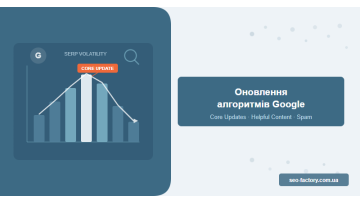
The scale of impact was unprecedented. According to Semrush Sensor and Ahrefs data, SERP volatility in verticals like health, finance, and affiliate reached 9–10 out of 10. Sites that had held top rankings for years disappeared from page one almost overnight.
What the March 2024 Core Update targeted
Google officially stated the goal was to reduce "unoriginal and low-quality content" in search results by 40%. The heaviest losses were seen among:
- Sites publishing mass AI-generated content without human editorial input
- Projects operating in health, finance, and legal verticals without demonstrable expertise
- Large numbers of affiliate review sites with shallow, templated product comparisons
- Automatically generated news aggregators providing no original reporting
There were clear winners too: independent blogs with genuine first-person expertise, community forums (Reddit and Quora saw significant gains), and sites with verifiable industry credentials and track records.
Lessons from March 2024 for SEO strategy
Several takeaways from analysing client project data during this period:
- E-E-A-T is mandatory, not optional. Authorship, demonstrable experience, and domain reputation became decisive ranking signals. Pages without a named author with real credentials lost positions even when the text itself was high quality.
- Depth beats breadth. One genuinely comprehensive, experience-backed piece consistently outranked five surface-level articles on the same topic.
- Off-site signals matter for resilience. Sites with natural, diverse backlink profiles and meaningful branded search traffic recovered faster and more completely.
For a full breakdown of E-E-A-T and how Google measures expertise, read our guide on E-E-A-T: how Google evaluates expertise and trust.
How to Track Google Updates
Tracking Google updates means more than just knowing they happened. It means understanding how a specific update affected your site and your competitive landscape — fast enough to respond intelligently rather than reactively.
Official sources
The most authoritative source is the Google Search Status Dashboard, where Google officially confirms updates with start and completion dates. Bookmark this page and check it weekly as a baseline habit.
Other official channels worth following:
- The Google Search Central blog — major changes are announced here before rolling out
- @googlesearchc and @JohnMu on Twitter/X — informal confirmations and early signals during active updates
- The Google Search Central Community forum — real-world reports from practitioners often surface patterns before official confirmation
SERP volatility monitoring tools
Official notifications are often insufficient: Google confirms updates after they finish, but a site can lose significant rankings within the first 24 hours. Automated monitoring fills the gap:
- Semrush Sensor — daily SERP volatility index from 0 to 10, broken down by industry vertical and country
- MozCast — algorithmic "weather" report showing daily turbulence levels
- Ahrefs Rank Tracker — alerts for sudden ranking changes on your tracked keyword set
- Google Search Console — the Performance report is the ground truth for your site's actual traffic and impression changes
Practical tip: configure weekly email reports in GSC and compare 7-day periods against the previous 7 days. A drop of more than 20% in a single week is a clear signal to cross-reference with the Search Status Dashboard.
For a complete walkthrough of Google Search Console as an SEO tool, see our full GSC guide.
Monitoring Tools Compared
Here's a practical side-by-side comparison of the main tools for tracking algorithmic changes:
| Tool | What It Shows | Update Frequency | Cost |
|---|---|---|---|
| Google Search Status Dashboard | Confirmed Google updates | After rollout completes | Free |
| Google Search Console | Traffic & rankings for your site | Daily (2–3 day lag) | Free |
| Semrush Sensor | SERP volatility by niche | Daily | Free (basic) |
| MozCast | Algorithm turbulence index | Daily | Free |
| Ahrefs Alerts | Ranking changes for a specific site | Weekly / threshold-based | From $99/mo |
| Semrush Position Tracking | Daily positions for your keyword set | Daily | From $129/mo |
The minimum viable free stack: GSC + Semrush Sensor + Google Search Status Dashboard. This combination is sufficient for most small-to-medium projects to detect volatility with enough lead time to investigate before drawing conclusions.
What to Do When Rankings Drop After an Update
A post-update drop is not the end. But it's also not something you can fix in a week. Here's the step-by-step approach we use with clients who come to us after an update-driven ranking loss:
Step 1. Confirm it's an algorithmic drop
First, rule out technical causes before assuming the algorithm is to blame:
- Check GSC for manual actions (Search Console → Security & Manual Actions)
- Verify the site is still indexed by running site:yourdomain.com in Google
- Match the traffic drop date against the update dates on the Search Status Dashboard
- Run a quick technical health check for crawl errors, Core Web Vitals regressions, and indexation issues via a technical SEO audit
Step 2. Identify the scope and pattern of the drop
Different drop patterns call for different responses:
| Drop Type | Signals | Priority Action |
|---|---|---|
| Isolated pages | 10–30% of pages dropped, rest stable | Content audit on the affected URLs |
| Topical cluster | All pages in one category dropped together | Review E-E-A-T signals and content depth |
| Entire domain | 50%+ drop across all verticals | HCU-style audit, remove low-value content |
Step 3. Run a content audit on affected pages
For each page that lost rankings, work through these questions honestly:
- Does the content match the actual search intent behind the target query?
- Does the page contain unique information not available in the top 5 competing results?
- Is authorship and experience visible — specific facts, data points, first-hand cases?
- Is the text over-optimised for keywords at the expense of readability?
- Does the page format match what users actually want (list, guide, comparison, tool)?
Step 4. Prioritise the fixes
Don't try to fix everything simultaneously. Categorise pages into three buckets:
- Improve — pages with existing traffic and clear ranking potential but weak content
- Consolidate — similar thin pages that should be merged into one authoritative resource
- Noindex or remove — pages with no organic traffic, no real search demand, and no clear value to users
Don't expect instant recovery. After a Core Update, Google will reassess your site during the next Core Update — typically 3–6 months away. Make improvements now, measure the impact in the next cycle.
E-E-A-T After Core Updates: What Google Actually Evaluates
E-E-A-T stands for Experience, Expertise, Authoritativeness, and Trustworthiness. Google doesn't score E-E-A-T as a single numerical metric — there's no dial that moves up or down. Instead, the system aggregates hundreds of signals that collectively form a picture of a source's quality. After March 2024, these signals became decisive ranking factors rather than secondary considerations.
Here's what concretely feeds each component:
Experience — first-hand engagement with the topic
Google attempts to identify whether content was written by someone who actually encountered the subject. Experience signals include:
- Specific numbers and dates from real work ("we saw a 34% traffic increase after implementing this")
- Screenshots, photos, or video — primary evidence of direct involvement
- Descriptions of failures and setbacks, not just successes
- Comparisons between expected and actual outcomes
Expertise — demonstrated subject-matter knowledge
For YMYL topics (Your Money Your Life — finance, health, legal), Google applies a higher bar. Expertise signals include:
- Named authorship with a link to the author's bio or an About page
- Verifiable credentials — certifications, professional roles, academic background
- Author mentions on other authoritative external sources
- Topical consistency — the author writes within a defined niche, not about everything
Authoritativeness — domain-level reputation
Authoritativeness is not a metric — it's a reputation built over time through consistent quality:
- Inbound links from topically relevant, high-authority sources
- Branded search queries — people searching for your site by name
- Unprompted citations from other resources
- Presence in Wikipedia, industry directories, and mainstream media
Trustworthiness — the foundation of the E-E-A-T pyramid
Google scrutinises trust signals closely, especially for commercial and YMYL sites:
- HTTPS with a valid, current SSL certificate
- Clear contact information and a physical address (for local businesses)
- Transparent editorial policy, publication dates, and update history
- Reviews on third-party platforms (Google Business Profile, Trustpilot, etc.)
In our audits, a surprisingly common E-E-A-T issue is author attribution — articles signed by "the editorial team" with no individual profile. Adding a real named author with a two-sentence bio consistently lifted CTR by 8–12% in our client projects, with no changes to the content itself.
AI Content and Core Updates: Where the Line Is
Since ChatGPT went mainstream, AI-generated content flooded the web. The natural question: does Google penalise sites for using AI to write articles? Google's official answer: AI-generated content isn't the problem — low-quality content is, regardless of how it was produced.
But the March 2024 Core Update told a more nuanced story. Sites relying heavily on unedited, mass AI-generated content took significant ranking losses. The reason is structural rather than categorical — AI-first content tends to:
- Lack genuine first-hand experience — it recombines existing facts without adding new perspective
- Miss the specific intent behind a query by covering topics broadly instead of precisely
- Repeat identical structures and templated phrasing that the algorithm has learned to recognise
- Go stale faster, since it's rarely updated with new developments
By contrast, AI-assisted content with strong human editorial input — where an author adds personal cases, unique data, and genuine critical thinking — performs well and holds rankings through updates.
The 70/30 rule: if AI generates the structure and base draft, a human editor should contribute at least 30% unique content — a real case study, current numbers, a critical angle not found elsewhere. Without this, the material reads as "hollow" to the algorithm.
How Google identifies scaled AI content
Google hasn't published its detection methodology. But observable patterns suggest the system flags sites based on:
- Publication velocity — hundreds of new articles per month triggers closer scrutiny
- Absence of original data — when a site never produces new facts, only aggregates existing ones
- Low engagement signals — short sessions and high bounce rates indicate users aren't finding what they need
- No brand signals — a site nobody searches for by name is a symptom of a "ghost" resource with no real audience
Broad Topics vs Narrow Niche: How Updates Changed the Rules
Before 2022, the "write about everything in your space" strategy worked reasonably well. A marketing blog could cover SEO, social media, email, copywriting, and paid ads — and rank across all of them. After the Helpful Content Update and March 2024, that strategy became much harder to sustain.
Google has significantly improved its understanding of topical authority — how deeply a site covers a specific knowledge domain. A site publishing 50 in-depth articles about technical SEO has more topical authority in that niche than a site with 200 shallow articles across all aspects of digital marketing.
What this means in practice:
- Semantic clusters outperform scatter-shot coverage — 20 interconnected articles on one topic will outrank 100 isolated pieces across different subjects
- Internal linking reinforces cluster authority — articles within a cluster should reference each other purposefully, not randomly
- Pillar page architecture — one comprehensive cornerstone article supported by several deep-dive cluster pieces covering subtopics
In our experience, SEO projects that adopted cluster-based content architecture before March 2024 either held or grew their rankings through the update. Those that continued "covering keywords" without topical structure lost 30–70% of organic traffic.
For more on building a semantic structure that survives algorithm updates, see our guide on building a keyword semantic core and clustering.
Mobile-First Indexing and Algorithm Updates
Google has been mobile-first since 2019, meaning the mobile version of your site is what the crawler indexes and evaluates. Algorithm updates amplify the impact of mobile quality issues — sites that would have ranked despite mobile UX problems now face compounding penalties when a Core Update reassesses quality signals.
The mobile signals that Core Updates scrutinise most closely:
- Core Web Vitals on mobile — LCP, INP, and CLS scores on mobile devices, not desktop. Mobile scores are typically 30–50% worse than desktop on the same site.
- Intrusive interstitials — pop-ups or overlays that block content on mobile are a direct negative signal
- Tap target sizing — buttons and links too close together create poor UX that impacts rankings
- Font size legibility — text smaller than 16px on mobile is a crawl-quality flag
Quick check: run your site through Google's Mobile-Friendly Test and PageSpeed Insights mobile tab before and after each major Core Update. If your mobile score drops below 50 on PageSpeed, that's a vulnerability the next update may exploit.
For a comprehensive mobile readiness audit checklist, see our guide on mobile-first indexing and readiness.
Update Resilience Checklist
The best strategy for dealing with Google updates isn't recovery — it's building a site that grows after every update. Here's a battle-tested checklist:
- ✓ Clear topical focus — the site covers one niche deeply rather than many topics shallowly
- ✓ E-E-A-T on every page — named author, demonstrable experience, concrete facts and figures
- ✓ Search intent alignment — content format and depth match what users actually expect for that query
- ✓ Regular content audits — quarterly review of underperforming pages
- ✓ Clean backlink profile — natural link acquisition, no mass link schemes or PBN exposure
- ✓ Technical site health — Core Web Vitals, mobile usability, clean indexation
- ✓ Brand signals — direct traffic, branded searches, citations, social mentions
- ✓ Ranking monitoring — weekly GSC analysis and alerts for sudden position changes
For more on building a site architecture that supports long-term ranking stability, read our piece on internal linking and site architecture.
If your site needs a full audit and update-resilience strategy, the SEO-Factory team can help. See our website promotion services.
Frequently Asked Questions
How often does Google release Core Updates?
Google releases major Core Updates roughly 3–4 times per year. In between, smaller targeted updates roll out — spam updates, product reviews updates, and helpful content updates. The algorithm changes daily in minor ways, but most changes are imperceptible to site owners.
What should I do if my site lost rankings after a Google algorithm update?
First, check Google Search Console for manual actions. If none exist, the drop is algorithmic. Analyse the pages that lost rankings: do they match user search intent, do they have E-E-A-T signals, are they over-optimised? Improvements typically only take effect during the next Core Update cycle.
How can I find out about a new Google update before my competitors?
Monitor Google Search Status Dashboard (official source), Semrush Sensor, and MozCast daily. Follow @googlesearchc and @JohnMu on Twitter/X. Set up Ahrefs or Semrush alerts for sudden ranking changes on your tracked keywords.
Can a site recover from the Helpful Content Update?
Yes, but it requires a thorough content audit. Google recommends checking whether content is written for people rather than search engines, and whether low-value pages are dragging down the entire domain. Recovery typically takes one or two Core Update cycles.
Did your site lose rankings after a Google update?
We'll audit your site, identify the root causes, and build a recovery plan aligned with the current algorithmic requirements.
Request an SEO Audit