Your shopping cart is empty!
Thin content refers to pages that deliver little or no value to users — empty product cards, auto-generated text, near-duplicate pages and doorway pages. Google penalises them through Panda and Helpful Content Update, dragging down the entire domain, not just the weak pages. Here is how to find, evaluate and fix thin content systematically.
Table of Contents
- What is thin content and why Google penalises it
- Types of thin content
- How Google detects thin content
- How to identify thin content on your site
- 4 strategies for handling thin content pages
- Minimum word count — myth or reality
- E-E-A-T and thin content — the direct link
- Case study: e-commerce site with 2,000+ empty product pages
- Audit and fix checklist
- Frequently asked questions
What is thin content and why Google penalises it
Thin content describes pages where there is either very little text or the text exists but carries no real value for a human reader. Google measures value through a straightforward question: will the user leave the page satisfied, or will they return to search for another answer?
Google officially flagged the issue in the 2011 Panda update, which wiped out thousands of content-farm sites overnight. Where Panda targeted obvious low-quality text, the Helpful Content Update (from 2022 onward) targets something subtler — pages that are technically competent but written for search engines rather than people.
The key insight: thin content is not only about page length. It is any page Google cannot confidently recommend to a user. For the broader algorithmic picture, see our step-by-step technical SEO audit guide.
Types of thin content
Across our client projects we encounter five recurring types, each requiring a different fix:
- Short pages with no substance — product or category pages with 20–50 words containing only a name and a price. The most common pattern in e-commerce.
- Auto-generated content — text created programmatically from templates. "Product Name is a quality item from a trusted manufacturer. Buy at a great price." Google recognises the templated syntax even when words are present.
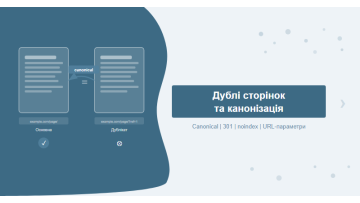
- Duplicate pages — identical or near-identical content across multiple URLs. Typical for category filter parameters, sorting options, or www/non-www variants without canonical tags.
- Affiliate pages with no added value — pages with partner links where the content is simply rewritten from the advertiser's site, with no original experience or analysis.
- Doorway pages — pages optimised for a specific query solely to redirect traffic elsewhere. A few seconds of content followed by a redirect is the classic pattern.
How Google detects thin content
Panda (2011, integrated into core ranking in 2016) evaluates content quality at the site level. It calculates the proportion of "low-quality" pages relative to the total indexed count. Once that share exceeds a threshold, the entire domain receives a downward ranking coefficient. Three hundred empty product cards in an online store are not 300 separate problems — they are one big domain-level problem.
Helpful Content Update (HCU, 2022–2024) goes further. It asks: "Was this page written for a person or for a search engine?" The algorithm analyses behavioural patterns: if average scroll depth is 5% and average time on page is 8 seconds, that is a clear signal the content serves no one.
In 2024, Google confirmed that HCU is now part of core ranking rather than a standalone filter. Sites with a high share of thin content receive a systemic ranking reduction, not isolated page-level penalties.
Google also uses Chrome UX Report (CrUX) data — real behavioural signals from Chrome users. When people consistently bounce from a page, the algorithmic signal is reinforced by real-world behaviour.
How to identify thin content on your site
A thorough thin content audit covers three data layers — each reveals a different angle:
- Google Search Console → Performance → Pages: sort by clicks. Pages with 0 clicks over 6+ months are primary candidates. See our complete Google Search Console guide for a deeper walkthrough.
- Screaming Frog → Spider → Export → Word Count: filter pages with fewer than 300 words. For e-commerce, the working threshold is 500+ for product pages and 800+ for category pages.
- Ahrefs → Site Explorer → Best Pages → Traffic = 0: pages generating zero organic traffic over any reasonable period.
Cross-reference the data: a page with Word Count < 50 AND Traffic = 0 AND 0 GSC clicks is almost certainly thin content. If any one signal is positive, investigate further before acting.
Useful Screaming Frog shortcut: after crawling, go to Bulk Export → Response Codes → 2xx and add Word Count and Page Title columns. Filter Word Count < 300 in Excel — instant audit-ready list.
4 strategies for handling thin content pages
There is no single answer — the right strategy depends on the page's potential, traffic and technical context. We apply this decision matrix across all projects:
| Strategy | When to apply | Conditions | Typical outcome |
|---|---|---|---|
| Improve | Page targets a valuable query but has weak content | Unique topic exists; room to add descriptions, specs, reviews, images | Ranking gains 4–8 weeks after recrawl |
| Consolidate | Multiple similar pages competing with each other | Duplicates or near-duplicates; can apply canonical or 301 redirect | Link equity consolidated on one stronger page |
| Noindex | Page is useful for users but not meant for search | Technical pages: cart, account, filter parameters | Reduced crawl budget consumption, cleaner index |
| Remove | Page has no traffic, no value and cannot be improved | Zero traffic for 12+ months; no backlinks; topic is obsolete | Gradual index cleanup, reduced thin content signal |
Warning: mass noindex is dangerous. Do not block more than 20–30% of your pages from indexing in one go without thorough analysis. In one of our projects, a client noindexed 40% of their site and lost 35% of total organic traffic within a month — including pages that were actively generating leads. Roll out any bulk changes in stages of 10–15% of total page count.
Minimum word count — myth or reality
No official minimum word count exists. Google has confirmed this through John Mueller repeatedly: "We do not count words. We evaluate value." But there is an important nuance that often gets missed.
The practical reality: word count is a proxy signal. A page with 50 words is statistically more likely to be useless than a page with 500. So algorithms "suspect" very short pages. But the reason for any ranking drop is the absence of value, not the word count itself.
In practice we apply working thresholds:
- Product pages: 300–500 words of unique description + specs + reviews
- Category pages: 600–1,000 words covering the range and helping buyers choose
- Informational articles: 1,500+ words for competitive queries
- Contact and utility pages: volume not critical — apply noindex
E-E-A-T and thin content — the direct link
E-E-A-T (Experience, Expertise, Authoritativeness, Trustworthiness) is Google's quality evaluation framework, codified in the Search Quality Rater Guidelines. Thin content typically fails on all four dimensions simultaneously.
We explored the full E-E-A-T framework in our dedicated article on how Google evaluates expertise and trust. Here is the direct link to thin content specifically:
- Experience: thin content never demonstrates first-hand experience. "A laptop is a good device for work" is not experience — it is filler.
- Expertise: auto-generated text carries no professional knowledge. Readers sense this within the first five seconds.
- Authoritativeness: a site with 500 empty product cards cannot appear authoritative to the algorithm.
- Trustworthiness: if half your site's pages are low-quality, why should Google trust the other half?
Thin content is not purely an SEO problem. It signals that a site does not invest in quality. Google reads the situation exactly that way.
Case study: e-commerce site with 2,000+ empty product pages
The client ran an online building materials store — 8,400 pages in Google's index. They came to us after organic traffic dropped 41% over three months with no apparent changes on the site.
What the audit revealed:
- 2,347 product pages with Word Count < 80 (name, price and a buy button only)
- 863 filter parameter pages without canonical tags — effectively duplicating category pages
- Combined, 38% of indexed pages qualified as thin content of various types
- The traffic drop correlated with the August 2024 core update
What we did:
- Top 200 products (by sales volume) — full descriptions of 400–600 words, specifications, per-product FAQ sections. Timeline: 6 weeks.
- Remaining 2,147 product cards — structured minimum: unique specs + 3–5 sentence descriptions generated from supplier data, making each card unique. Timeline: 3 weeks.
- 863 filter pages — canonical tags pointing to corresponding category pages.
- Noindex applied to 120 technical pages (search results, comparison tool, cart).
Results 12 weeks after completion:
- Organic traffic: +67% relative to post-drop baseline (18% above the original pre-drop level)
- Pages in index: reduced from 8,400 to 5,890 — smaller, higher-quality index
- CTR in GSC: from 1.8% to 3.1% thanks to improved title/description on updated product pages
- Share of thin content: from 38% to 6%
This case illustrates why thin content is a domain-level signal rather than an isolated page problem. The cleanup delivered results across the entire domain, not just the fixed URLs.
Audit and fix checklist
Use this checklist as the foundation for your own audit. For methodology on prioritising pages by topic value, see our article on building and clustering a semantic core.
- Build the baseline list: GSC → Performance → Pages → filter by 0 clicks over 6 months.
- Crawl: Screaming Frog → Word Count < 300 → export CSV.
- Cross-check: Ahrefs Site Audit → Issues → "Low word count" and "Duplicate content".
- For each page, determine: traffic (yes/no) → duplicates (yes/no) → topic potential (yes/no).
- Assign a strategy using the matrix above (improve / consolidate / noindex / remove).
- Implement in stages: no more than 15% of pages per change round.
- Request recrawl: GSC → URL Inspection → Request Indexing for updated pages.
- Monitor: after 4 weeks review Coverage and click dynamics in GSC.
- Repeat audit quarterly — thin content accumulates over time, especially in stores with frequent catalogue updates.
In Practice
An insurance comparison site had 2,200 pages generated from a single template: "Insurance [type] in [city]" — 80 words of boilerplate text, no real tariff data, no insurer contacts, nothing a user could act on. After a Google Helpful Content Update rollout, the site lost 71% of organic traffic in two weeks.
A Screaming Frog crawl confirmed the obvious: all 2,200 pages were functional duplicates with city-name substitution. GSC showed zero clicks on 1,980 of them over the previous three months.
The recovery plan had two phases. First, Ahrefs Site Audit identified 600 pages that had any historical traffic or link equity — these were expanded to 600–900 words each, with real premium tables from 3–5 insurers, side-by-side condition comparisons and a per-policy FAQ. The remaining 1,600 stub pages were deleted with 301 redirects to thematic category pages.
Four months after the work was complete, traffic had fully recovered. The indexed page count dropped from 2,200 to 620, and average CTR in GSC climbed from 0.4% to 2.9%.
When a site loses 70%+ of traffic after HCU, improving a handful of pages changes nothing — the algorithm has already labelled the domain as a template-content source. Recovery means cutting the index more aggressively than feels comfortable, then making what remains genuinely unique.
Frequently asked questions
What is thin content in simple terms?
Thin content refers to pages that provide little or no value to users: empty product cards, auto-generated text, duplicate pages, and doorway pages. Google ignores them or demotes them in search rankings.
How many words are enough for a page to avoid thin content issues?
There is no official minimum. Google evaluates content value, not word count. A page with 200 words of real experience outperforms 1,500 words of filler. For commercial product pages, 300–500 unique words is a practical working threshold.
Should I delete thin content pages?
Deletion is the last resort. First try: improving the content, consolidating similar pages via canonical or 301 redirect, or blocking from indexing with noindex. Only delete pages that have zero traffic and cannot be meaningfully improved.
How does Helpful Content Update affect thin content?
Helpful Content Update (launched 2022, strengthened in 2024) is a site-wide signal. If a significant portion of your pages qualify as thin content, the entire domain loses ranking power — not just the weak pages. Cleanup must be systematic, not selective.
Thin content hurting your rankings?
We run a full technical audit, identify thin content pages dragging your domain down, and deliver a prioritised action plan — improve, consolidate, noindex or remove.